
Mouth Breathing Isn't Just a Habit: What Parents Should Know

If your child frequently breathes through their mouth, there may be more going on than a simple habit.
Many children who primarily breathe through their mouths are responding to difficulty breathing through their noses, rather than simply choosing a habit. Persistent mouth breathing may be associated with differences in tongue resting posture, oral function, feeding, and sleep quality.
When sleep is disrupted, daytime attention, energy, and regulation may also be affected. Understanding what is contributing to mouth breathing can help guide appropriate support.
So what should parents look for?
What Does Mouth Breathing Look Like?
Mouth breathing isn't always obvious.
You may notice it during the day, while your child is eating, or while they're sleeping.
Some signs to watch for include:

Sleep & Daytime Patterns.
• Snoring or noisy breathing during sleep
• Restless sleep or sleeping with the mouth open
• Pauses in breathing, gasping, or labored breathing during sleep
• Daytime tiredness
• Irritability or difficulty managing emotions
• Difficulty focusing

Oral & Facial Patterns
• Mouth frequently open and lips apart at rest
• Dry or chapped lips; drooling
• Tongue resting low or forward in the mouth
• Crowded teeth or a narrow palate

Feeding & Communication
• Food frequently escaping the mouth during chewing
• Chewing with the mouth open
• Slow or effortful eating
• Unclear speech sounds
• Tongue pushing forward between the teeth during speech or swallowing
These signs can have several causes. A healthcare provider can help determine what’s contributing.
Other concerns may occur alongside mouth breathing.
Some children may also experience teeth grinding, unclear speech, or crowded teeth/narrow palate. These concerns can coexist with mouth breathing, but they are not necessarily caused by it. Looking at the full picture can help determine whether further evaluation may be helpful.
Why Does Mouth Breathing Happen?
Children may breathe through their mouths because of congestion, allergies, or enlarged tonsils or adenoids. The pattern may continue after the original difficulty improves.
Mouth breathing may occur alongside a low or forward tongue resting posture. At rest, the tongue typically rests gently against the roof of the mouth, with the tip just behind the upper front teeth. Nasal breathing difficulties should be evaluated before encouraging a closed-mouth resting posture.
Some children also experience disrupted breathing during sleep. Even when they appear to sleep through the night, poor sleep quality may contribute to daytime tiredness, irritability, and difficulty focusing.

Why Does It Matter?
Persistent mouth breathing may be associated with:
• Differences in oral resting posture and function
• Chewing or feeding challenges
• Speech sound differences
• Sleep disruption
• Dental alignment concerns
When breathing disrupts sleep, daytime energy, attention, and emotional regulation may also be affected.
Not every child who mouth breathes experiences these concerns. Understanding the underlying cause helps guide appropriate care.
What Can Parents Do?
Start by noticing your child's patterns.
Ask yourself:
Does my child regularly sleep with their mouth open?
Do they snore or have noisy breathing?
Are their lips usually apart when they're resting?
Do they seem tired or have difficulty focusing during the day?
Do they have difficulty chewing or eating efficiently?
Have I noticed their tongue sitting low in their mouth?
Is their speech sometimes unclear?
These observations can be helpful when talking with your child's healthcare providers.

How Can Therapy Help?
Speech-language and myofunctional therapy may help support several areas related to oral function, including:
• Oral resting posture
• Nasal breathing habits
• Tongue coordination
• Chewing and swallowing patterns
• Speech clarity
• Feeding efficiency
• Oral-motor coordination
Depending on your child's needs, collaboration with other providers may also be helpful. Inside Out may work alongside ENTs, pediatricians, dentists, orthodontists, and airway-focused providers when appropriate.
Wondering If Your Child Is a Mouth Breather?
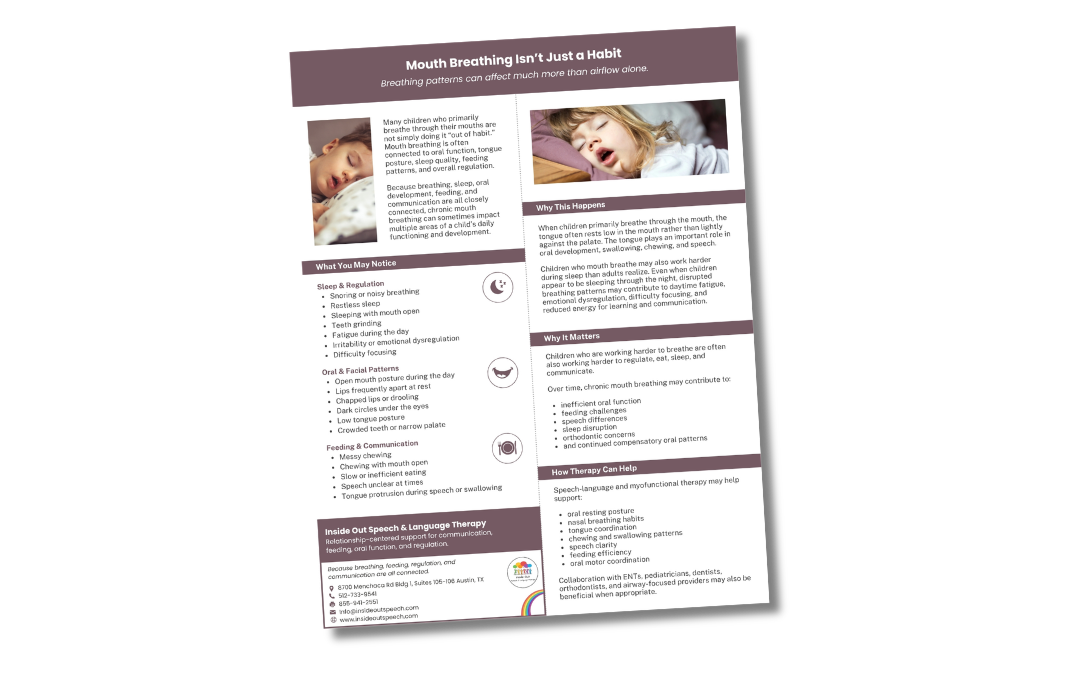
We've created a simple Mouth Breathing: What Parents Should Know guide to help you recognize some of the patterns discussed above.
Download the Free Guide
Inside the handout, you'll find:
• Signs to watch for during sleep
• Oral and facial patterns to notice
• Feeding and communication signs
• Why mouth breathing can matter
• How therapy may help
You Don't Have to Figure It Out Alone
If you've noticed persistent mouth breathing, open-mouth posture, snoring, feeding difficulties, or changes in your child's speech or energy, it's okay to ask questions.
Mouth breathing isn't always just a habit. Looking at the bigger picture can help you better understand what your child may need.
At Inside Out Speech & Language Therapy, we provide relationship-centered support for communication, feeding, oral function, and regulation.
Have questions about your child's breathing or oral function?
Inside Out Speech & Language Therapy
8700 Menchaca Rd Bldg 1, Suites 105–106
Austin, TX
512-733-9541
Info@insideoutspeech.com
www.insideoutspeech.com
Because breathing, feeding, regulation, and communication are all connected.
